









The career of technology entrepreneur Syed Jafri spans software engineering, startup entrepreneurship, enterprise technology leadership and, more recently, preventive health technology. His professional path has moved across several industries, but a recurring theme connects those experiences: using technology to make complicated systems easier to operate and understand.
Jafri’s current work as the founder of Vitals Vault represents the latest stage of that progression, bringing together his technology background with an interest in preventive healthcare and health data.
An Engineering Foundation at McMaster University
Jafri’s formal engineering education began at McMaster University in Canada, where he completed a Bachelor of Engineering in Computer Engineering from 2002 to 2006.
He later returned to McMaster for a Master of Engineering, completing the program between 2011 and 2013. The degree is identified in his professional materials as being focused on Engineering Entrepreneurship and Innovation.
His LinkedIn records independently identify both McMaster degrees, including the 2002–2006 bachelor’s degree and the 2011–2013 master’s degree.
The combination of computer engineering and engineering entrepreneurship provides useful context for understanding Jafri’s later career. His professional history has included both technical engineering work and roles involving product development, business operations and organizational leadership.
An Early Move Into Entrepreneurship
Before Vitals Vault, Jafri had already experienced the challenges of building a consumer-facing company.

According to the client-provided career materials, Jafri co-founded Halal Plates in August 2015, a direct-to-consumer halal meal-kit company serving customers across Ontario, Canada. He served as Co-Founder and CEO.
The company was subsequently acquired in 2017.
That experience gave Jafri an early opportunity to work on a consumer business outside the traditional software industry. Rather than operating solely as an engineer, he was responsible for the broader challenges associated with building a company and serving customers.
The experience would later form part of a career that moved between startup environments and much larger technology organizations.
From Startup Entrepreneurship to Instacart
Following the acquisition of Halal Plates, Jafri moved back into technology, joining Instacart as a Senior Software Engineer, according to the career information supplied for this profile.
The transition was significant. His experience moved from running a consumer startup to working within a technology company whose operations depended heavily on software, logistics and large-scale digital infrastructure.
It also added another layer to his understanding of consumer technology: how software systems need to function not merely as products, but as infrastructure supporting real-world services.
More Than Six Years at Amazon
Jafri later joined Amazon, where his career developed through increasingly senior engineering and product leadership responsibilities.
The client-provided biography states that he worked across Amazon business units including Prime Video and Amazon Music before becoming General Manager of Product and Engineering within Enterprise Engineering.
Public profile aggregations also describe Jafri’s Amazon background as including engineering and product leadership across Enterprise Engineering and Amazon Music, as well as senior management experience with Prime Video.
This period of his career is particularly relevant to his current work because it exposed him to the organizational and technical challenges associated with operating at very large scale.
Instead of working only on individual applications or features, senior technology leadership involves coordinating people, products, engineering systems and business priorities.
That experience would later become relevant to the problem Jafri chose to tackle in healthcare.
Returning to Entrepreneurship With Vitals Vault
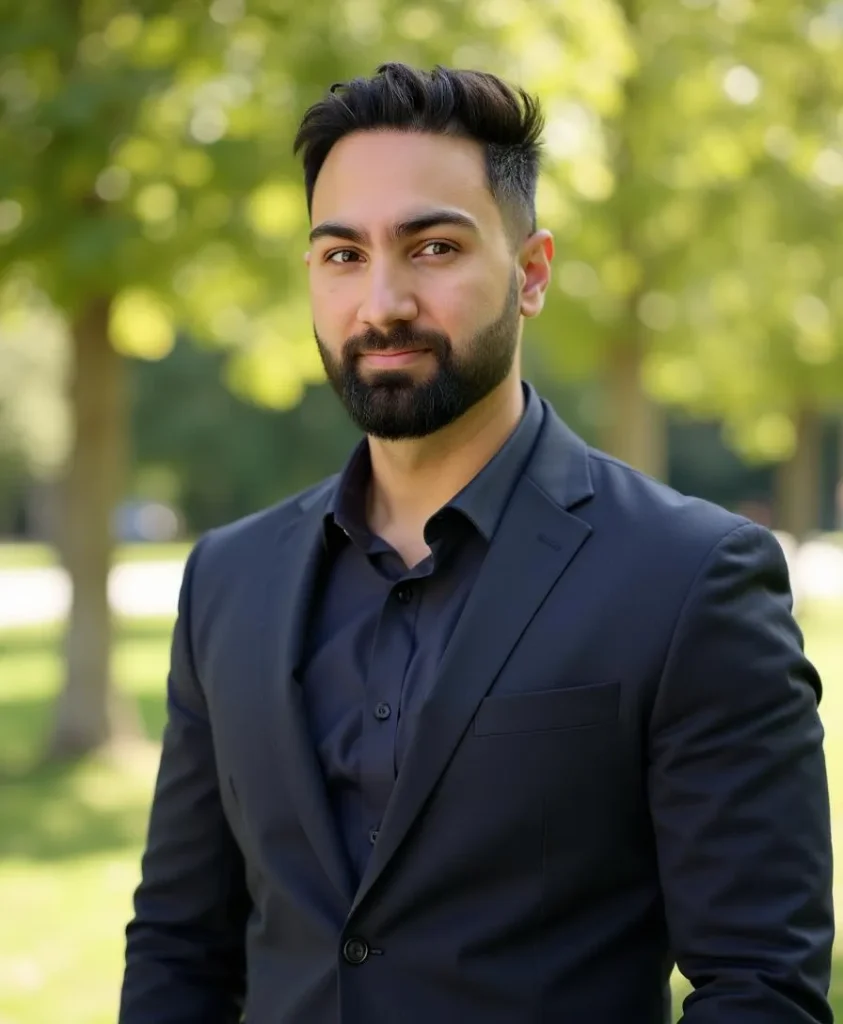
Syed Jafri founded Vitals Vault in October 2024.
Vitals Vault is positioned as a health technology company focused on preventive health, laboratory testing and the interpretation of health information.
The company’s stated approach is different from simply providing individual laboratory results. Its materials describe an effort to bring laboratory data, historical results and other health information together so that individuals can see relationships and trends rather than isolated numbers.
That distinction is central to the company’s positioning.
From Building Technology to Interpreting Data
The connection between Jafri’s earlier career and Vitals Vault is therefore less about moving from one unrelated industry to another and more about applying a familiar technology philosophy to a new domain.
Software engineering is often concerned with turning complicated processes into systems that can be understood and operated efficiently.
Jafri’s current work applies a similar philosophy to health information.
Vitals Vault describes its platform as an intelligence layer designed to help users understand laboratory results and their relationships over time. Its current product information describes comprehensive testing, historical tracking, personalized action plans and access to more than 1,000 available tests through participating Quest Diagnostics locations.
The company also describes a proprietary clinical intelligence engine using evidence-based rules and multiple data sources. Those capabilities are company-reported rather than independently verified performance claims.
A Career Defined by Different Forms of Scale
Viewed chronologically, Jafri’s career has moved through several kinds of scale.
Halal Plates provided experience building a consumer company. Instacart provided exposure to software supporting a large digital marketplace. Amazon provided experience with enterprise technology and large organizations.
Vitals Vault represents another kind of scaling challenge: making complex health information more accessible to individual consumers.
The industry has changed, but the underlying question remains familiar—how can technology make complicated systems more useful to the people who depend on them?
For Jafri, that question has evolved from software and consumer technology into the field of preventive health.
Fun Trivia — Syed Jafri
- 🐓 Born in December 1981, Syed Jafri is a Metal Rooster in the Chinese zodiac.
- 🍽️ Before health tech, Jafri was in food tech, co-founding Halal Plates.
- 🚀 Halal Plates was acquired in 2017, marking an early entrepreneurial exit for Jafri.
- 📦 He spent six years at Amazon, working across Prime Video, Amazon Music, and Enterprise Engineering.
- 🎬🎵 His Amazon résumé spans both movies and music — Prime Video and Amazon Music.
- 💻 Jafri went from computer engineering to entrepreneurship, eventually becoming founder and CEO of Vitals Vault.
- 🧬 His career has crossed food delivery, entertainment, enterprise technology, AI, and health tech.
- 🔬 With Vitals Vault, Jafri shifted his focus from building technology platforms to helping people understand their health data.
- 🪪 His full legal name is Syed Mohammad Ali Jafri, though professionally he generally goes by Syed Jafri.