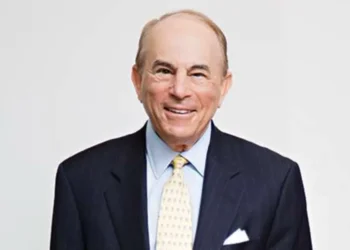










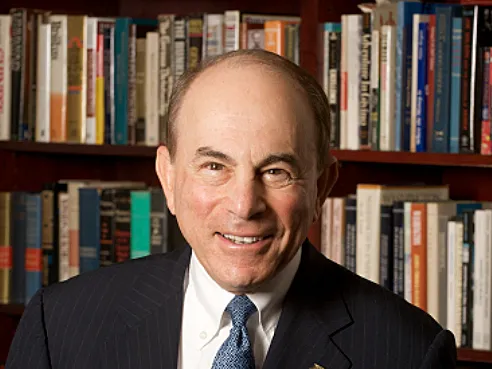
Building a successful career requires more than talent, ambition, or the ability to recognize an opportunity. It also requires knowing how to lead people, navigate uncertainty, make difficult decisions, and recognize when the path ahead needs to change. Few careers illustrate these lessons as clearly as that of Ed Hajim, whose experience spans engineering, investment management, executive leadership, education, and philanthropy.
Throughout his career, Hajim has held leadership positions at major financial institutions before becoming chairman and CEO of Furman Selz. His experiences have shaped a philosophy of leadership grounded in strong principles, thoughtful decision-making, surrounding yourself with capable people, and understanding that success is measured by more than financial results.
In this interview, Hajim reflects on the experiences that shaped his approach to business, what separates transformational leaders from those who simply maintain an organization, the importance of mentorship and team building, and how to recognize when it is time to walk away from a position that no longer aligns with your goals. He also discusses the role of philanthropy in professional responsibility and why the lasting impact of a career is ultimately measured by the people and institutions it leaves behind.
You built a long career in a competitive financial industry. What early professional experience most influenced the way you evaluated opportunities and made decisions?
The most important early professional experience that influenced the way I evaluated opportunities and made decisions was my 10 years at The Capital Group in Los Angeles. The company had an outstanding investment methodology focused on in-depth research and determining long-term value. In addition, it had a very strong set of principles for managing its people. These experiences confirmed my belief that you must always balance the interests of clients, employees, and stakeholders when making decisions.
You held leadership positions at several major financial institutions before becoming chairman and CEO of Furman Selz. What distinguishes a leader who can maintain an organization’s success from one who can transform it?
A leader who can transform an organization rather than simply maintain its success has a number of important characteristics.

First, that person must have a clear, well-defined vision of where they want to take the organization. Second, they must be good at managing change and the disruption it may cause. Third, they must be a motivator whose communication brings about the intended results. Fourth, and this may need to happen first, they must assemble a team committed to the vision. This may entail making some difficult personnel changes.
Someone who transforms an organization has to be more of a leader than a maintainer, with stronger views and beliefs about where the organization needs to go. In most cases, the transformer will be more of a risk taker, more comfortable with risk.
How did your background in engineering and your education at Harvard Business School prepare you for the investment world, and where did experience teach you things that formal education could not?
My engineering education was vital. It taught me how to work, think, and collaborate. It gave me a framework for describing a problem, designing a method to solve it, executing that method, and analyzing the results. Then, if necessary, you start over with the information you have obtained.
Harvard Business School, through the case method, allowed me to apply myself to many different situations. It also forced me into daily face-to-face exchanges with very bright people who agreed and disagreed with me. It introduced me to the ideas of waves, trends, and cycles, which helped me better understand how and why companies succeed and fail.
What formal education could not teach me, and what only experience can teach, is people management. What does it take to motivate a group, and how do you gain genuine commitment? These are skills that can only be developed, as Rudyard Kipling said, “by being in the area.”
I would also add the importance of having principles, such as the belief that you can accomplish anything if you don’t care who gets the credit, among others.
You have emphasized the importance of surrounding yourself with capable people. How do you identify individuals who will strengthen a team, and what do effective leaders need to provide in return?
I have emphasized that you are only as good as the people you surround yourself with. Although developing this ability takes time and experience, I have a checklist of the characteristics I believe will strengthen my team. That list has been developed through numerous interviews, résumé reviews, reading, and finding mentors who have been good at identifying people.
The key to finding people who will strengthen a team is making sure the individuals can work well together.
In return, effective leaders must demonstrate a sincere interest in their people, including their personal lives. They must also provide a fair, easily understood compensation system and maintain constant, but not overly intrusive, involvement.
I feel that my greatest contribution has been giving my people the feeling that I genuinely want them to exceed their own expectations.
In business, leaving a position or organization can sometimes be as important as pursuing a new opportunity. How have you learned to recognize when it is time to make a major professional change?
I agree that leaving a position or organization can sometimes be as important as pursuing a new opportunity. I have identified a number of reasons for making such a decision.
First, it may be time to leave when an organization is heading in a direction that you do not believe will lead to success. That was the case for me at E.F. Hutton, where the company did not want to grow its institutional business, which I believed was the future.
Second, it may be time to move on when you feel you have accomplished as much as you can and that someone else should take your place to bring in fresh ideas and energy. This happened when I completed my eight-year term as chairman of the Board of Trustees at the University of Rochester.
Third, you may reach a point when you want to make a major change in direction, such as placing less emphasis on corporate work and focusing more on charitable activities.
Fourth, when you find that the work experience is “unliveable” as mine was at Lehman Bros under a difficult and nearly impossible to work for boss.
Financial success is often treated as the ultimate measure of achievement. What other indicators do you consider when evaluating whether a career has been worthwhile?
Beyond financial success, I believe there are several other measures of achievement. As a manager, the ultimate measure is whether your partners and employees benefited from the journey you took together.
Did you produce something useful for your clients? Did your work leave examples that could help others pursuing similar paths? Did some of your employees go on to lead successful lives because of their association with you?
Lastly, if you were fortunate, did you leave a legacy that you can be proud of?
You have also devoted significant time and resources to education and philanthropy. At what point did giving back become an essential part of your understanding of professional responsibility?
After about 10 years of focusing primarily on achieving financial success, I recognized that I had a responsibility to give back. This was simply based on the fact that I had been given so much, including a scholarship to attend college and the opportunity to be accepted into Harvard Business School.
Since education had changed my life, I felt it was the area where I would focus my philanthropic activities.
Early in my career, one of my role models, a very successful Wall Street executive, had a policy that all of his employees should donate a certain amount of money to charity. I followed that example and made giving back an essential part of my professional responsibility.
What role has mentorship played in your own career, and how can experienced executives make their guidance genuinely useful to younger professionals?
Mentorship has been vital to my career. I have always had a mentor who was on a similar path to mine but about 10 years ahead of me. I wanted to be able to talk to people who had already been where I hoped to go, or, as I like to say, those who had “been there, done that.”
The most important thing experienced executives can do to make their guidance useful is to serve as role models. This includes how they conduct themselves not only in their professional lives but also in their personal lives.
To be useful to younger professionals, you must be genuinely interested in their well-being. At least part of my success has come from the fact that my associates know I truly want them to be more successful than they think they can be.
When a young professional feels that you are genuinely interested in their success, your guidance will be more readily accepted.